Category: Adventure
576 game(s)All Adventure Games for SNES
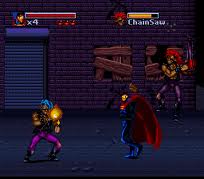
Death and Return of Superman
The Death and Return of Superman is a beat 'em up video game based on the Death of Superman storyline. It features many characters from the comics, including Superman himself, Superboy, Steel, Cyborg, the Eradicator, and Doomsday. All of the five Supermen are playable characters at some point.
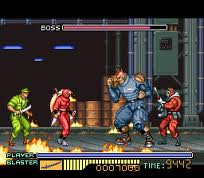
The Ninja Warriors
The Ninja Warriors, originally released as The Ninja Warriors Again (ザ・ニンジャウォーリアーズアゲイン?) and also known as Ninja Warriors: The New Generation, is a 1994 beat 'em up video game developed by Natsume and published by Taito Corporation for the Super Nintendo Entertainment System. The game is a remake of Taito's 1987 arcade game The Ninja Warriors.
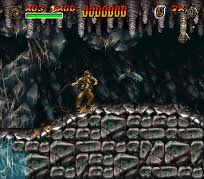
Indiana Jones' Greatest Adventures
Indiana Jones' Greatest Adventures is a 1994 platform video game released for the Super Nintendo Entertainment System. It is a video game adaptation of the Indiana Jones films Raiders of the Lost Ark (1981), Indiana Jones and the Temple of Doom (1984), and Indiana Jones and the Last Crusade (1989). The game was developed by Factor 5 and published by JVC Musical Industries, Inc. The story is told through cut-scenes and text and is mostly faithful to the movies. Its release also coincided with the release of Super Star Wars: Return of the Jedi, also released by JVC and LucasArts and in the same platform style as the Super Star Wars trilogy.
A Sega Mega Drive/Genesis port of the game was apparently completed and ready to be released between summer and autumn of 1995, and was previewed in Electronic Gaming Monthly (#73, August 1995)[2][3] and even reviewed in GamePro (#73, August 1995, rated 3.5 out of 5.0)[4] and in Germany's GAMERS (November 1995 issue, rated 2 (B Grade).[5][6] But like many third-party titles near the end of the Genesis' life however, the game was shelved and was never released, and no known copies have been released to the public.
Mario & Wario
Mario (Japanese: マリオ, Hepburn: Mario?) is a fictional character in the Mario video game franchise by Nintendo, created by Japanese video game designer Shigeru Miyamoto. Serving as Nintendo's mascot and the eponymous protagonist of the series, Mario has appeared in over 200 video games since his creation. Depicted as a short, pudgy, Italian plumber who resides in the Mushroom Kingdom, he repeatedly rescues Princess Peach from the Koopa villain Bowser and stops his numerous plans to destroy him and take over the kingdom. Mario also has other enemies and rivals, including Donkey Kong and Wario.
Mario is said by many to be the most famous character in video game history. Mario games, as a whole, have sold more than 210 million units, making the Mario franchise the best-selling video game franchise of all time. Outside of the Super Mario platform series, he has appeared in video games of other genres, including the Mario Kart racing series, sports games, such as the Mario Tennis and Mario Golf series, role-playing video games such as Paper Mario and Super Mario RPG, and educational games, such as Mario Is Missing! and Mario's Time Machine. He has inspired television shows, film, comics and a line of licensed merchandise. Since 1995, Mario has been voiced by Charles Martinet.
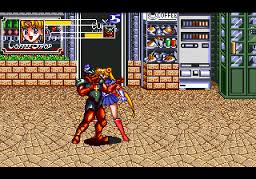
Bishojo Senshi Sailor Moon: Another Story
Sailor Moon (美少女戦士セーラームーン Bishōjo Senshi Sērā Mūn?, originally translated as Pretty Soldier Sailor Moon[1] and later as Pretty Guardian Sailor Moon[2][3]) is a Japanese shōjo manga series written and illustrated by Naoko Takeuchi. It was originally serialized in Nakayoshi from 1991 to 1997; the 52 individual chapters were published in 18 tankōbon volumes. The series follows the adventures of Usagi Tsukino as she transforms into the titular character to search for a princess and an artifact called the "Legendary Silver Crystal" (「幻の銀水晶」 Maboroshi no Ginzuishō?, lit. "Phantom Silver Crystal"). During her journey, she leads a diverse group of comrades, the Sailor Soldiers (セーラー戦士 Sērā Senshi?) — Sailor Guardians in later editions — as they battle against villains to prevent the theft of the Silver Crystal and the destruction of the Solar System.
Clock Tower
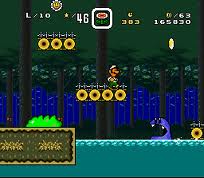
Mario is Missing!
Mario is Missing! is an educational game created for MS-DOS, the SNES, and the NES. The gameplay was widely panned by critics, although its Super Mario World music remixes have gained recognition. Mario is Missing! was released in floppy disk format for MS-DOS in 1992, with the CD-ROM Deluxe edition and console versions released the following year. A follow-up called Mario's Time Machine was eventually produced. This is the first game where Luigi is the main protagonist with Mario in a supporting role and it was the only solo adventure for Luigi until 2001 when Luigi's Mansion was released on the Nintendo GameCube.
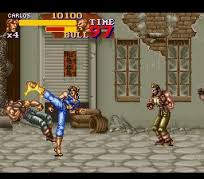
Final Fight 2
Final Fight 2 is a side-scrolling beat 'em up video game released by Capcom for the Super Nintendo Entertainment System (SNES) in 1993. It is a sequel to the coin-operated arcade game Final Fight, which was previously also released for the SNES. Final Fight 2 was developed by Capcom's consumer division with no preceding coin-op version. The game was re-released onto Wii's Virtual Console service in 2009 for the North American and European regions.
Unlike the SNES version of the first game, Final Fight 2 supports two-player simultaneous play and has a total of three playable characters. The only playable character from the first game to return is Mike Haggar. Two new player characters were introduced: Carlos and Maki Genryusai. In the game's plot, the three battle the resurgent Mad Gear gang at various locations around the world to rescue Maki's sister and father, who are also the fiancée and teacher respectively of Guy from the first Final Fight.
Capcom followed up the game with another SNES-exclusive sequel, Final Fight 3, which saw the return of Guy to the series. None of the new characters from Final Fight 2 returned, although Maki made appearances in various Capcom fighting games years later.
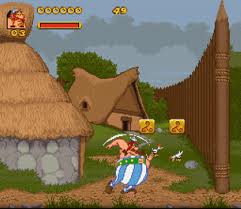
Asterix & Obelix
Asterix & Obelix is a game released by Infogrames in 1996, for the PC, SNES, Game Boy and Game Boy Color, the player can choose to play with both Asterix or Obelix. The game also supports two players at the same time (both in the keyboard).
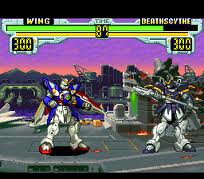
Shin Kidō Senki Gundam Wing: Endless Duel
New Mobile Report Gundam Wing: Endless Duel (新機動戦記ガンダムW Endless Duel?) is a head-to-head fighting game released exclusively in Japan in 1996. It was the first video game to be based on the Mobile Suit Gundam Wing anime series, and has never been released outside of Japan. The developers have used the same engine as previously used in another game, Mighty Morphin Power Rangers: The Fighting Edition, but with some improvements added exclusively to this game.
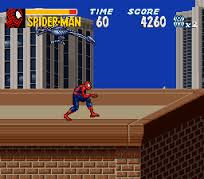
Amazing Spider-Man - Lethal Foes
The Amazing Spider-Man: Lethal Foes (スパイダーマン リーサルフォーズ?)[4] is a 1995 Japan-exclusive action game for the Super Famicom based on the Marvel Comics character Spider-Man. This game was based on a storyline used by Marvel Comics back in 1993 entitled "The Lethal Foes of Spider-Man."
The cover art for the game was designed by comic book artists Mark Bagley, Karl Kesel, and Paul Mounts.
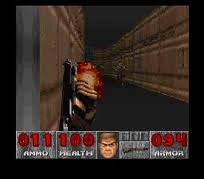
Doom
Doom (typeset as DOOM in official documents)[1] is a 1993 science fiction horror-themed first-person shooter video game by id Software. It is considered one of the most significant and influential titles in the video game industry, for having ushered in the popularity of the first-person shooter genre. The original game is divided into three nine-level episodes and distributed via shareware and mail order. The Ultimate Doom, an updated release of the original game featuring a fourth episode, was released in 1995 and sold at retail.
In Doom, players assume the role of an unnamed space marine, who became popularly known as "Doomguy", fighting his way through hordes of invading demons from Hell. With one third of the game, nine levels, distributed as shareware, Doom was played by an estimated 10 million people within two years of its release, popularizing the mode of gameplay and spawning a gaming subculture. In addition to popularizing the FPS genre, it pioneered immersive 3D graphics, networked multiplayer gaming, and support for customized additions and modifications via packaged files in a data archive known as "WADs". As a sign of its effect on the industry, first-person shooter games from the genre's boom in the 1990s, helped in no small part by the game's release, became known simply as "Doom clones". Its graphic violence, as well as satanic imagery, made Doom the subject of controversy.
The Doom franchise was later continued with the follow-up Doom II: Hell on Earth (1994) and numerous mission packs, including Master Levels for Doom II (1995), and Final Doom (1996). Originally released for PC DOS, the games have later been ported to numerous other platforms. Once the game's source code was released in 1997, it spawned even more adaptations, as fans further ported the code to countless devices. The series started to lose mainstream appeal as the technology of the Doom game engine was surpassed in the mid-1990s, although fans have continued making WADs, speedruns, and modifications to the original. The franchise again received popular attention in 2004 with the release of Doom 3, a retelling of the original game using new technology, and an associated 2005 Doom motion picture. Doom 4 was announced as in production in 2008 and was later retitled simply as Doom.
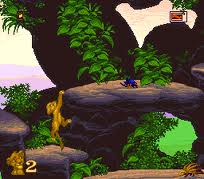
Lion King
The Lion King is a video game based on Disney's popular animated film. The title was published by Virgin Interactive in 1994, and was released on SNES, NES, Game Boy, PC, Sega Mega Drive/Genesis, Amiga, Master System and Game Gear. The NES and Master System versions of the game were never released in North America because this is the final game for the former system released in Europe. A PlayStation launch title was going to be released in Japan but was cancelled for unknown reasons. The game follows Simba's journey from a young carefree cub to the battle with his evil uncle Scar as an adult.
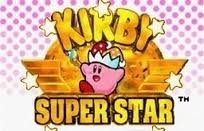
Kirby Superstar
Kirby Super Star, known as Kirby's Fun Pak in Europe and Hoshi no Kirby Super Deluxe (星のカービィスーパーデラックス Hoshi no Kābī Sūpā Derakkusu?, lit. "Kirby of the Stars Super Deluxe") in Japan, is a 1996 platforming video game developed by HAL Laboratory and published by Nintendo for the Super Nintendo Entertainment System video game console. It was first released in Japan on March 21, 1996, in North America on September 20, 1996, and in Europe on January 23, 1997. Kirby Super Star′s box art states that the game features eight games in one cartridge. Most of these games offered are mostly platforming-oriented, while some others are mini-games. The game was later released for the Wii Virtual Console in Japan in October 2009 and in North America and Europe in May 2009 while the Wii U Virtual Console version was released in Japan on May 1, 2013 and in North America and Europe on May 23, 2013, although the Wii U Europe users get the North America version instead.
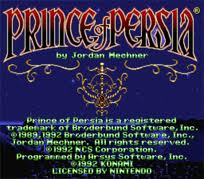
Prince of Persia
Prince of Persia is a fantasy platform game, originally developed by Jordan Mechner and released in 1989 for the Apple II, that represented a great leap forward in the quality of animation seen in video games. After the original release on the Apple II, it was ported to a wide range of platforms. The game influenced a subgenre known as the cinematic platformer, which imitated the sprawling non-scrolling levels, fluid animation, and control style.